Expiry, returns & support
Prevent avoidable loss. Decide what should be credited before Finance posts it.
Keep the first expiry or return signal, intervention, field action, recheck, claim and credit decision in one case rather than reconstructing them later.
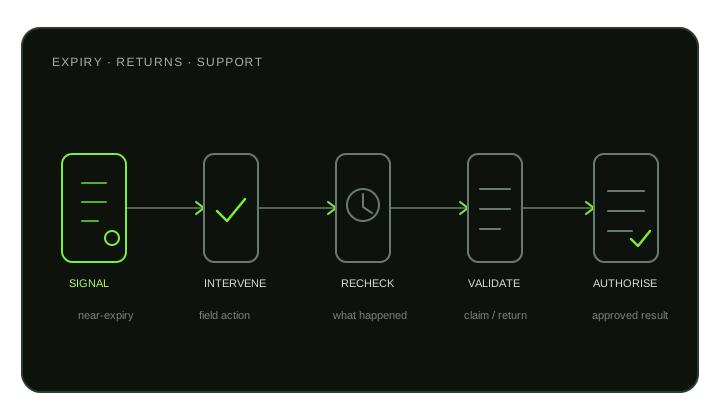
An expiry warning may sit in one message thread, a funded intervention in another and the later return in a separate warehouse or Finance process.
Treat the issue, action and financial consequence as one controlled case.
The proposed model links the first signal, accountable decision, field execution, recheck, claim or return, warehouse validation and credit authorisation. The approved outcome then passes to the existing finance process for posting.
Workflow direction
Follow the issue from first warning to final outcome.
Detect near-expiry, support or return activity.
Let the responsible manager decide the action.
Issue the field work and retain proportionate evidence.
Verify what happened before the issue disappears into memory.
Match claim or return history and check credit eligibility.
Release the approved result to Finance or ERP for accounting.
Keep observed, claimed and approved quantities distinct.
This control model is being validated. It separates what was observed, what was claimed and what should eventually be posted through the existing finance process.
- Field capture should stay exception-based and proportionate to risk.
- Observed, claimed, received, eligible, authorised and credited quantities remain distinct.
- Funded support and physical returns converge at an authorisation gate before Finance posts the credit.
- The customer’s designated systems remain authoritative for accounting and stock-ledger treatment.
Design discipline
Keep field work proportionate.
The proposed workflow avoids asking merchandisers to record routine replenishment. Evidence becomes stronger only as financial or control risk increases.
Existing finance remains authoritative
Authorise the outcome before it is posted.
ShelfGrid holds the supporting history, evidence and accountable decision. The approved result then moves into the existing process used to create the credit note and financial entry.
Continue

See how this could fit your current process.
Start with the way expiry, returns and credits are handled today.